


While corporate travel managers and buyers are struggling to integrate mobile into their travel programmes, travellers are happily using smartphones to ‘access-all-areas’ of information – courtesy of Google – when they’re on the move. So how I wonder will travel buyers cope with the next wave of innovation set to disrupt everything they think of as normal?
 An early warning sign emerged with Pokemon Go and its augmented-reality iteration on smartphones that caught the world’s imagination. Among news stories of obsessive ‘collectors’ straying onto highways during rush-hour (not all were teenagers either!) was a mention from Egencia – the corporate services division of Expedia. Egencia suggested the same technology powering Pokémon Go could easily lead to business travellers ‘tapping into’ augmented-reality travel apps as part of their daily business routines, for example, when visiting a new destination.
They also shared a distinctly ‘tongue-in-cheek’ taster of what this kind of augmented-reality flavoured world might look like: Hyper Reality video
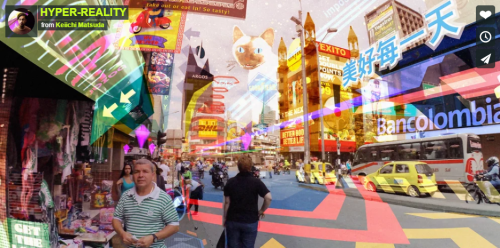
(Source: http://info.egencia.com/UK2016Q2Blog_PokemonGo.html?platform=hootsuite )
On a more serious note, there are plenty of developers with a vision (pun intended) for more widespread apps that go beyond gaming into everyday use whether you’re at home, in the workplace or in unfamiliar locations, like a city or resort you’re visiting for the first time.
Skipping the usual suspects of Google Glass, Facebook and Oculus Rift VR headsets or Microsoft’s Holo-Lens, recent news highlighted the arrival of Snapchat Spectacles.
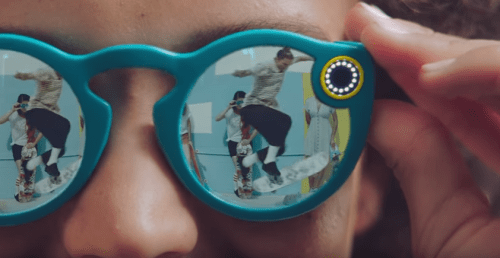
Launched as $130 glasses and known simply as Spectacles by Snap Inc., they feature a tiny circular camera mounted on the lens Spectacles Youtube video that lets you take first-person video footage and upload instantly to the Snapchat site. Friends can then watch what you’re doing in ‘real time’. Think Google Glass spliced with GoPro.
(Source: http://oursocialtimes.com/snapchat-spectacles-mean-marketers/ )
The Snapchat video shows content for its typical ‘millennial’ users but think instead of the potential for wider applications. For example, imagine a business traveller filming a walk from a downtown hotel to their regional company office and then sharing it with colleagues who’ve yet to visit the same office for the first time.
Snapchat Spectacles may seem a little gimmicky. Perhaps you can’t see business people walking around with a pair of these Spectacles on – unless they’re on R&R or at a rock concert!
But then have you ever done this?
You’re attending a meeting in a part of London you’ve never been to before. So you jump onto Goggle Maps and search using the postcode of your meeting venue. Clicking on Directions you then ‘walk-the-walk’ on your PC or tablet using ‘StreetView’. Forgive the Google plug here, but even this rudimentary 2-D experience leaves you feeling that you know exactly how to get there – step by step. And when you actually go the meeting, you recognise shops, pubs, office buildings, footpaths and road layouts on what now reassuringly feels like a familiar route to follow.
So swap the brightly coloured fun shades for a more conventional pair of designer glasses, and picture a business man or woman walking to a meeting, recording and storing a video of their route.
If this becomes normal and regular behaviour, how will companies contend with ever-increasing volumes of employee-generated video flooding data storage capacity and threatening in-house data security protocols? Will they try to prohibit their use? We already know what happens. Employees circumvent company channels and just share via social media with colleagues anyway.
Not convinced that people are going to share knowledge and tips about everyday work stuff?
Think about this recent news item then.
Viv joining forces with Samsung
Viv is the team that brought the world Siri – on behalf of Apple – and they’ve developed an artificial intelligence assistant as an open-source platform…called Viv.
The vision is for Viv to be on any and all of your devices and for you to talk to it, conversational-style, learn your personal preferences and run applications for you. They want this to be on your smartphone, tablet, PC, TV or indeed everyday devices that might constitute the Internet Of Things (IoT), like smart-watches, fridges, cars, home utilities & security systems, etc.
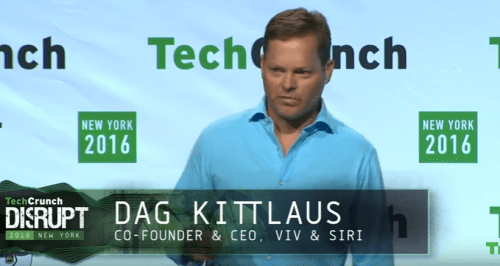
In the words of Dag Kittlaus, Co-Founder/CEO Siri & Viv Labs “Soon, we’ll all have a trusted assistant that is a regular part of our everyday lives. We deeply believe this to be true. This assistant will be as ubiquitous and important as the web browser or the mobile app.
If you can imagine such an assistant, you can also imagine how it will become the most powerful marketplace for content and commerce services. This will be the third true paradigm of the Internet age, a world decidedly “beyond the app.”
In order for Viv to utilise the incredible scale Samsung offers, and in order to achieve our ultimate goal of redefining the way people interact with the digital landscape, it would be essential for Viv to be available across more than just Samsung devices. Our vision requires that Viv is everywhere.”
Viv will operate as an independent entity and Samsung fully support this open-source approach which means Viv could easily end up on competitor products.
For an in-depth look at Viv, see its launch at TechCrunch, NYC – May 2016:
(Source: https://elevate.samsunggic.com/the-path-to-intelligence-everywhere-5635193a355c#.xez6bk5vu )
“Learn your personal preferences and run apps for you”
The next generation of business leaders, who’ve ‘grown-up’ on the web and used smartphones to share and collaborate, are starting to progress as a cohort into senior and upper management levels within the corporate world.
How much easier could it be than to simply talk to your smartphone, watch or PC and ask it, for instance, to “Send Bill Smith my video of Walk from Hilton Downtown to New York office”?
We’re only really just starting to share knowledge about the easiest and best way to travel through unfamiliar cities, countries, and cultures across the world by using emerging technology platforms. As momentum builds, though, it will inevitably override what looks like outdated corporate behaviour driven through the command and control management style that has held sway over the last 100-years.
Streaming video of where you are as you walk around and just talking to your virtual assistant telling it to do stuff for you will make sharing experiences and knowledge a whole lot easier.
And the easier it gets, the more people will do it.
 Just Barry's Blog